Hall for Ancestry Worship (Fengxiandian)
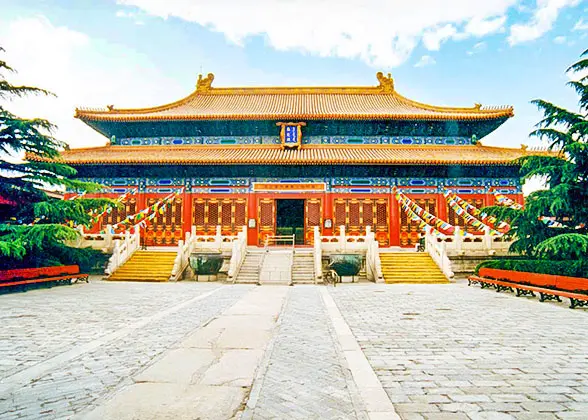
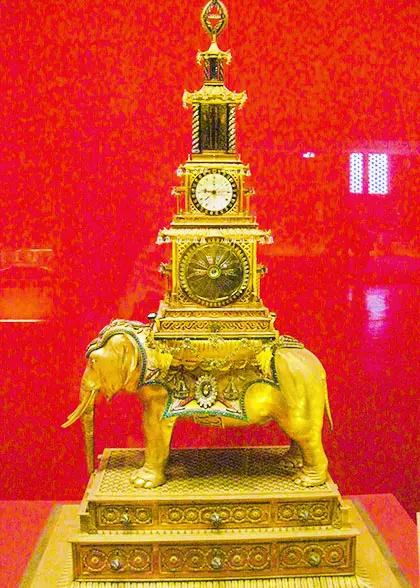
The Hall for Ancestral Worship in the Forbidden City is a complex built to facilitate emperors to worship their ancestors. It now houses the Palace Museum's acclaimed Gallery of Timepieces. Located in the southern auxiliary chambers, the gallery showcases an extraordinary array of Qing court clocks. Far more than mere timekeepers, they are masterpieces of mechanical automata, musical chimes, and hydraulic engineering, categorized by origin from imperial workshops to Britain.
The complex features an I-shaped (工) layout, a design dictated by its function. The front hall hosted grand, public state ceremonies, while the rear hall was reserved for quiet, private family remembrance. A covered corridor connects the two, ensuring seamless rituals regardless of the weather.
The front hall is towering, spacious, and features the highest decorative tier, designed for large-scale ceremonies with music and dance to project imperial majesty. In contrast, the rear hall resembles ancestral "sleeping quarters." Divided into small alcoves, each housed the spirit tablets of an emperor and empress, simulating them "residing" in separate rooms.
The entire complex is enclosed by high walls. Standing here, you can feel a profound tranquility and isolation from the outside world.
Unlike the silent remembrance common today, emperors continued to care for their families as if they were still here.
In the back hall, which was like the ancestors' private bedrooms, attendants placed fresh, seasonal food in front of each tablet every single day. It was a daily ritual of provision, symbolizing the enduring care of the living lineage for their forebears.
On the 1st and 15th of every lunar month, the emperor held a more formal ceremony in the front hall. Think of it as the imperial family's regular gathering, where everyone came together to pay their respects as a group.
For major events, such as a great victory, a royal wedding, or even a disaster, the emperor came here to report it. It was like a child seeking approval or comfort from their parents, sharing life's essential moments and asking for their guidance from beyond.
Early Ming (1368-1644) rules dictated that only the emperor and his primary empress could be enshrined, with a strict cap of nine generations. The Qing Dynasty (1644-1911) adopted a more relaxed approach: all emperors and all their empresses including successive and posthumously honored ones were eligible, with no numerical limit.
The Ming strictly enforced the "nine-generation rule"; once full, the most distant ancestors' tablets were moved to a dedicated temple to make room. When the Qing faced space shortages in later years, they simply divided large alcoves into two smaller niches to accommodate more tablets.
The hall enshrines one exceptional figure: Emperor Ruizong (1476–1519), who never actually reigned. He was the biological father of Emperor Jiajing (1507–1567).
Since the previous emperor had no son, his cousin Jiajing was chosen to succeed. Once on the throne, Jiajing insisted on elevating his own father to imperial status, sparking the fierce "Great Rites Controversy." Ultimately, he succeeded in having his father's tablet placed here, making Ruizong the only non‑reigning emperor ever enshrined in the hall.
While the Qing had 12 emperors, only 11 tablets reside here. The missing one belongs to Puyi (1906-1967), the last emperor. His abdication ended the dynasty, and his later role as a Japanese puppet emperor disqualified him from entering the Qing royal ancestral shrine.
Amid the management turmoil following the Qing collapse in 1914, a eunuch stole Emperor Qianlong (1711-1799)'s tablet and sold it to a German antique dealer. Lost overseas for nearly a century, it was finally purchased at auction by a Chinese businessman in 2005 and donated back to the Palace Museum.
 |
| Hall for Ancestry Worship |
While the clocks captivate today's visitors, the silent halls surrounding the gallery hold the key to a deeper story. The rest of the complex, though not currently open to the public, retains its architectural form, allowing us to glimpse the profound world of imperial ancestral veneration.
The Hall for Ancestral Worship was basically the emperor's private family chapel inside the Forbidden City. He'd leave the politics and heavy robes at the door and just show up as a regular descendant paying respects to his ancestors. It's the same thing as us visiting family graves or flipping through old photo albums, like just people remembering where they came from.
Emperor Hongwu (1328-1398) established the first Hall for Ancestral Worship in Nanjing's palace in 1370. Finding the state-level sacrifices at the Imperial Ancestral Temple too infrequent to satisfy his filial devotion, he created this intimate space for daily morning and evening offerings, plus monthly observances. Emperor Yongle (1360-1424) later replicated this hall when relocating the capital to Beijing. The Qing dynasty's Emperor Shunzhi ( 1638-1661) then rebuilt it in 1657 on the original Ming foundations, creating the structure standing today.Why Was Hall for Ancestral Worship Built?
The Hall for Ancestral Worship was basically the emperor's private family chapel inside the Forbidden City. He'd leave the politics and heavy robes at the door and just show up as a regular descendant paying respects to his ancestors. It's the same thing as us visiting family graves or flipping through old photo albums, like just people remembering where they came from.
What Does Hall for Ancestral Worship Look Like?
The complex features an I-shaped (工) layout, a design dictated by its function. The front hall hosted grand, public state ceremonies, while the rear hall was reserved for quiet, private family remembrance. A covered corridor connects the two, ensuring seamless rituals regardless of the weather.
The front hall is towering, spacious, and features the highest decorative tier, designed for large-scale ceremonies with music and dance to project imperial majesty. In contrast, the rear hall resembles ancestral "sleeping quarters." Divided into small alcoves, each housed the spirit tablets of an emperor and empress, simulating them "residing" in separate rooms.
The entire complex is enclosed by high walls. Standing here, you can feel a profound tranquility and isolation from the outside world.
How Did Emperors Honor Their Ancestors at the Hall?
Unlike the silent remembrance common today, emperors continued to care for their families as if they were still here.
In the back hall, which was like the ancestors' private bedrooms, attendants placed fresh, seasonal food in front of each tablet every single day. It was a daily ritual of provision, symbolizing the enduring care of the living lineage for their forebears.
On the 1st and 15th of every lunar month, the emperor held a more formal ceremony in the front hall. Think of it as the imperial family's regular gathering, where everyone came together to pay their respects as a group.
For major events, such as a great victory, a royal wedding, or even a disaster, the emperor came here to report it. It was like a child seeking approval or comfort from their parents, sharing life's essential moments and asking for their guidance from beyond.
Who Earned a Place in the Hall for Ancestral Worship?
Early Ming (1368-1644) rules dictated that only the emperor and his primary empress could be enshrined, with a strict cap of nine generations. The Qing Dynasty (1644-1911) adopted a more relaxed approach: all emperors and all their empresses including successive and posthumously honored ones were eligible, with no numerical limit.
What Happened When Space Ran Out?
The Ming strictly enforced the "nine-generation rule"; once full, the most distant ancestors' tablets were moved to a dedicated temple to make room. When the Qing faced space shortages in later years, they simply divided large alcoves into two smaller niches to accommodate more tablets.
The Exception: Emperor Jiajing's Father
The hall enshrines one exceptional figure: Emperor Ruizong (1476–1519), who never actually reigned. He was the biological father of Emperor Jiajing (1507–1567).
Since the previous emperor had no son, his cousin Jiajing was chosen to succeed. Once on the throne, Jiajing insisted on elevating his own father to imperial status, sparking the fierce "Great Rites Controversy." Ultimately, he succeeded in having his father's tablet placed here, making Ruizong the only non‑reigning emperor ever enshrined in the hall.
The Emperor Without a Tablet: Puyi, China's Last Feudal Emperor
While the Qing had 12 emperors, only 11 tablets reside here. The missing one belongs to Puyi (1906-1967), the last emperor. His abdication ended the dynasty, and his later role as a Japanese puppet emperor disqualified him from entering the Qing royal ancestral shrine.
The Stolen Tablet of Emperor Qianlong
Amid the management turmoil following the Qing collapse in 1914, a eunuch stole Emperor Qianlong (1711-1799)'s tablet and sold it to a German antique dealer. Lost overseas for nearly a century, it was finally purchased at auction by a Chinese businessman in 2005 and donated back to the Palace Museum.
Getting There
 |
| Gallery of Timepieces Photos |
Located in the eastern Inner Court, south of the Six Eastern Palaces, the Hall for Ancestry Worship is easily accessible.
After visiting the Three Great Halls of the Outer Court and reaching the Gate of Heavenly Purity Square, simply walk east for about 5 minutes, and you will reach here.
 Next:
Next:Go west back to the central axis, and see the Gate of Heavenly Purity (Qianqingmen), the entrance to the Inner Court.
Go east to see the Palace of Tranquil Longevity (Ningshougong), a large building complex where the Treasure Gallery is located.
 Further Reading: How to visit the Forbidden City
- Last updated on Apr. 28, 2026 by Jally Zhang -